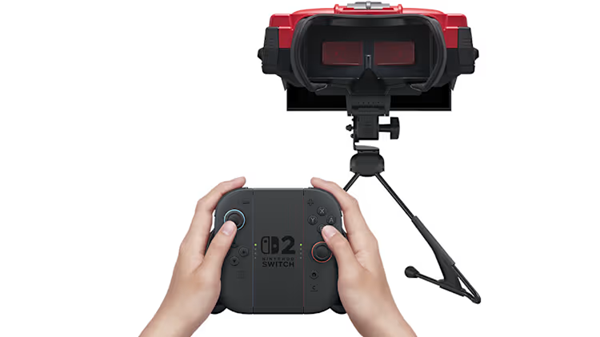
On February 17, 2026, Nintendo did something unprecedented: they brought back their biggest commercial failure. The Nintendo Virtual Boy Switch 2 accessory launches exactly 30 years after the original Virtual Boy’s disastrous debut, transforming a console that barely sold 770,000 units into a $99.99 nostalgia piece for modern gamers.
This isn’t just another retro release. Nintendo rarely acknowledges the Virtual Boy existed, making this revival all the more shocking. The company has reimagined their 1995 red-and-black headache machine as a functional accessory that accepts both Switch and Switch 2 consoles, complete with access to classic Virtual Boy games through the Nintendo Switch Online + Expansion Pack subscription. It’s a bold bet that today’s collectors will pay premium prices for yesterday’s mistakes.
From Market Failure to Collectible: The Virtual Boy’s Transformation
Original Virtual Boy Specifications and Commercial Failure
The original Virtual Boy launched in 1995 with revolutionary ambitions and catastrophic execution. Its stereoscopic 3D display showed only red graphics, caused eye strain after brief sessions, and required a table-mounted stand that eliminated portability. The device lacked any head tracking and cost $179.95—expensive for a system with barely any games.
Nintendo discontinued it after just six months in North America and one year in Japan. With 770,000 units sold worldwide, it became Nintendo’s worst-performing hardware ever. Even the Wii U managed 13.56 million units by comparison. The Virtual Boy became a cautionary tale about rushing unproven technology to market, something Nintendo’s legendary designer Gunpei Yokoi warned against before being overruled.
The New Replica Design and Technical Differences
The 2026 Virtual Boy accessory takes a cleverly different approach. Rather than creating a standalone console, Nintendo designed a faithful replica shell that holds your Switch or Switch 2 as the display. The $99.99 unit includes a sturdy metal stand, swappable adapters for both console generations, and removable red lens filters that recreate the original’s distinctive monochrome look.
Nintendo added decorative touches like fake vintage ports on the exterior purely for authenticity. The replica maintains the original’s bulky aesthetic and table-mount design, which creates an interesting tradeoff: you get authentic Virtual Boy nostalgia, but you sacrifice the head-tracking capabilities that modern VR experiences expect. For purists playing actual Virtual Boy games, this limitation doesn’t matter. For those wanting full VR functionality with newer titles, it becomes a significant drawback.
Dual Accessory Strategy: Premium vs Budget Options
Full-Size Virtual Boy Replica at $99.99
Nintendo’s premium replica targets serious collectors who remember the original system or want a conversation piece for their gaming setup. The metal construction and faithful proportions make it feel substantial rather than cheap. The stand provides stable stationary play, and the authentic design details—from the controller connection points to the eyepiece spacing—recreate the 1995 experience with surprising accuracy.
However, that $99.99 price point positions this squarely as a specialty item. You’re paying for nostalgia and build quality, not practical functionality. The fixed stand means you can’t move your head naturally when playing VR-enabled Switch 2 games, limiting the accessory’s versatility. It’s perfect for experiencing Nintendo Switch Online Virtual Boy titles as originally intended, but less ideal for modern VR applications that expect freedom of movement.
Cardboard Model Alternative at $24.99
The cardboard alternative at $24.99 represents Nintendo’s practical side winning out over pure nostalgia. This lightweight headset resembles the Labo VR Kit approach, offering full portability and unrestricted head tracking. For players more interested in experiencing VR modes in games like Super Mario Odyssey, The Legend of Zelda: Breath of the Wild, or Super Smash Bros Ultimate, the cardboard version delivers better functionality.
The price difference is significant enough that many enthusiasts will likely buy both: the premium replica for display and authentic Virtual Boy gaming sessions, and the cardboard version for actual VR gameplay. This dual-accessory strategy seems intentional, allowing Nintendo to serve both collector and practical user audiences without compromise. The cardboard model also introduces the concept to budget-conscious gamers who might otherwise skip VR accessories entirely.
Game Library and Nintendo Switch Online Integration
Launch Titles and Future Releases
Seven Virtual Boy games arrive at launch exclusively for Nintendo Switch Online + Expansion Pack subscribers. The lineup includes recognizable titles like Wario Land and Teleroboxer alongside Japan-exclusive curiosities such as Mansion of Innsmouth. Nintendo promises 14 total titles eventually, including previously unreleased games Zero Racers and D-Hopper that never made it to market in 1995.
This represents a significant portion of the Virtual Boy’s tiny 22-game library. By making these accessible through an existing subscription rather than individual purchases, Nintendo lowers the barrier to experiencing these historical oddities. Many of these games were legitimately good but never found audiences due to the hardware’s failure. Wario Land for Virtual Boy particularly earned critical praise despite the platform’s commercial disaster.
VR Compatibility Beyond Virtual Boy Games
The Switch 2 VR headset accessories aren’t limited to 30-year-old games. Both versions support existing VR-enabled titles that originated with the Labo VR Kit in 2019. Super Mario Odyssey offers VR concert performances and level exploration. Captain Toad: Treasure Tracker includes VR-enhanced puzzle stages. Breath of the Wild provides immersive exploration of Hyrule.
This backward compatibility gives the accessories immediate value beyond nostalgia. Switch 2 owners can experience enhanced versions of games they already own while waiting for new VR-enabled titles. The confirmation that these accessories work with Switch 2 hardware suggests Nintendo plans ongoing VR support, though likely as a supplemental feature rather than a core focus like PlayStation VR or Meta Quest platforms.
Conclusion
The Nintendo Virtual Boy Switch 2 revival proves that even spectacular failures can find second lives when positioned correctly. By pricing the premium replica at $99.99, Nintendo targets dedicated collectors rather than mass audiences, acknowledging this product’s niche appeal. The dual-accessory approach balances nostalgia with practicality, while game library integration through Nintendo Switch Online + Expansion Pack adds genuine value beyond novelty.
Whether this experiment succeeds depends on how many gamers value owning a piece of gaming history enough to pay premium prices. Nintendo has transformed a cautionary tale into a collectible curiosity—a fitting redemption arc for their most notorious hardware misstep.
Leave a Reply