Introduction
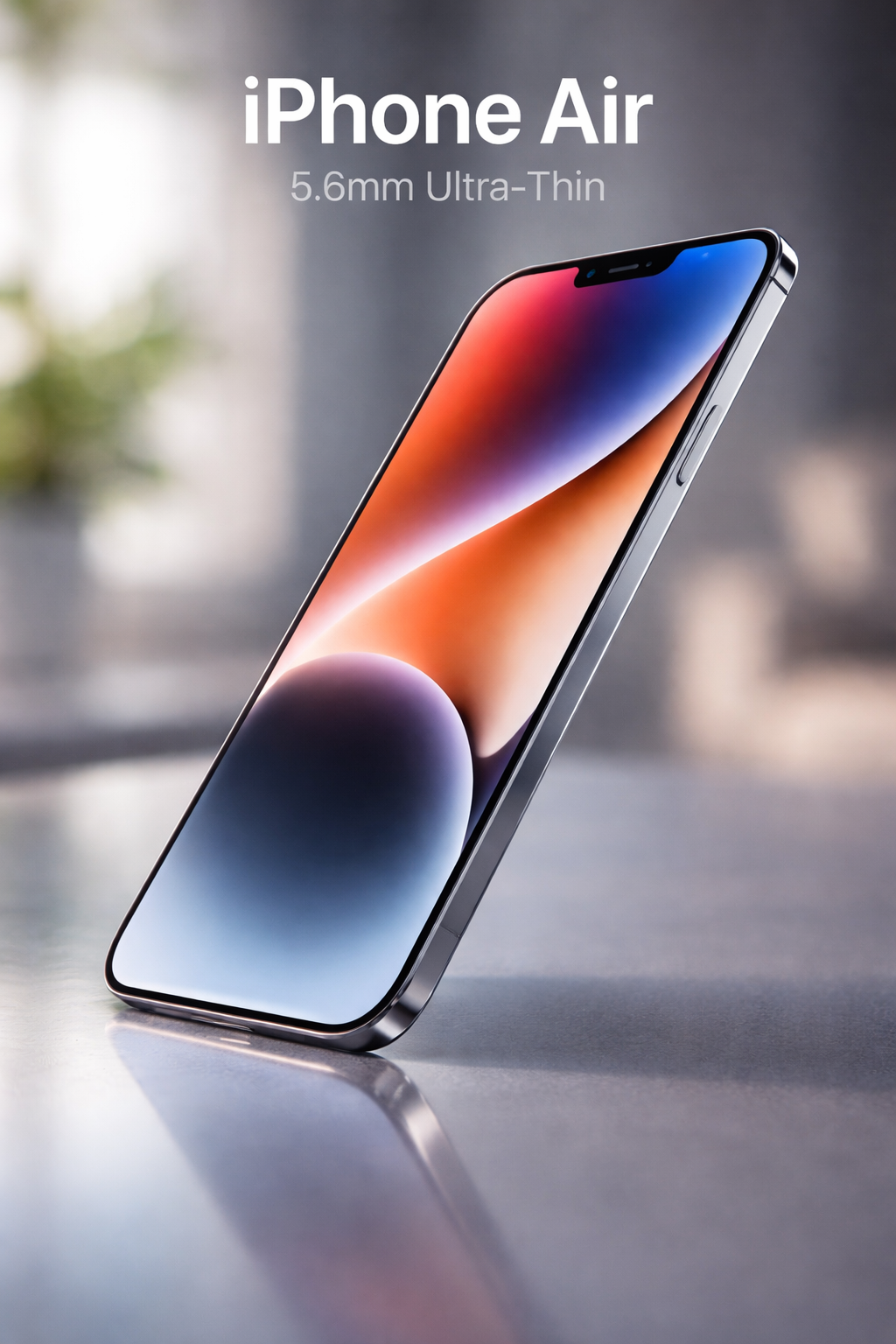
At just 5.6mm thick and weighing 165 grams, the iPhone Air represents Apple’s boldest design gamble since the iPhone X. When I first held it, the immediate reaction was disbelief—how could something this thin pack flagship-level performance? But that question quickly evolved into something more complex: does extreme thinness justify sacrificing features that power users have come to expect?
Table of Contents
- Introduction
- What Makes the iPhone Air Revolutionary (And Controversial)
- Real-World Performance: Three Months With the iPhone Air
- Who Should Buy the iPhone Air in 2025?
Three months after launch, the iPhone Air has divided the Apple community. Some view it as the future of smartphone design. Others see it as form triumphing over function. The device starts at $999, positioning itself between the standard iPhone 17 and the Pro models. It’s marketed as a premium alternative for users who value aesthetics and portability above all else. But with significant compromises including a single camera, mono speaker, and smaller battery, is this breakthrough design worth your money?
What Makes the iPhone Air Revolutionary (And Controversial)
The Engineering Behind Ultra-Thin Design
Creating the thinnest iPhone ever required Apple to completely reimagine smartphone construction. The titanium frame weighs 40% less than stainless steel while maintaining structural integrity. Apple developed a new motherboard design that stacks components vertically rather than horizontally, reducing internal space by 35%. The A19 Pro chip uses a 3-nanometer process that generates less heat, eliminating the need for traditional heat dissipation systems.
The display technology deserves special attention. Apple engineered a custom OLED panel that’s 0.3mm thinner than previous generations without sacrificing the 2,000-nit peak brightness. The battery required entirely new chemistry—a lithium-silicon anode that stores more energy in less space. Every internal component was custom-designed for this device. Even the SIM tray was eliminated globally, making the iPhone Air the first eSIM-only device worldwide. These aren’t minor tweaks; they represent fundamental engineering breakthroughs.
Key Specifications vs iPhone 17 and Pro Models
The iPhone Air measures 5.6mm thick with a 6.5-inch display, making it thinner than Samsung’s Galaxy S25 Edge at 5.8mm. It runs the same A19 Pro chip found in the Pro models, delivering identical performance for everyday tasks and gaming. The device features 8GB of RAM and starts with 256GB storage, double the base iPhone 17 capacity.
Here’s where compromises become apparent. The single 48MP Fusion camera lacks the ultra-wide and telephoto lenses found on Pro models. Battery capacity sits at 3,149 mAh compared to 3,877 mAh in the iPhone 17 and 4,685 mAh in the 17 Pro Max. The mono speaker setup eliminates the stereo separation that enhances video watching. Starting at $999, it costs $200 more than the iPhone 17 but $100 less than the Pro. You’re paying a premium specifically for thinness and the titanium design—not additional features.
Real-World Performance: Three Months With the iPhone Air

Battery Life Reality Check
I approached the iPhone Air’s 3,149 mAh battery with skepticism. How could a battery this small survive a full day? Three months in, the answer is nuanced. The A19 Pro’s efficiency is genuinely impressive. Apple rates the device at 27 hours of video playback, and my testing confirms this. For typical usage—social media, messaging, web browsing, and occasional photos—the Air consistently lasted from 7 AM to 11 PM with 15-20% remaining.
However, heavy use tells a different story. Video recording drains the battery noticeably faster than the iPhone 17. Extended gaming sessions require midday charging. Apple clearly anticipated this, releasing a $99 MagSafe Battery accessory that magnetically attaches to the back. While it adds 5mm of thickness (defeating the Air’s purpose), it extends usage to approximately 40 hours. The battery isn’t a dealbreaker for most users, but power users should seriously consider whether this trade-off aligns with their needs.
Camera Capabilities and Limitations
The 48MP Fusion camera produces genuinely excellent photos in good lighting. Apple’s computational photography compensates brilliantly for the single-lens limitation. The sensor offers 2x telephoto through cropping without visible quality loss. Portrait mode works surprisingly well, and night mode captures impressive detail. For everyday photography—vacation shots, social media content, family photos—the Air absolutely delivers.
The limitations become frustrating in specific scenarios. Without an ultra-wide lens, architectural photography and group shots in tight spaces prove challenging. The lack of a dedicated telephoto means the 5x zoom available on Pro models simply doesn’t exist here. Video creators will miss the multi-camera flexibility. I found myself reaching for my iPad when shooting product reviews or landscape photography. If photography is central to your smartphone usage, the single camera represents the Air’s most significant compromise. It’s capable but limited—fine for casual users, restrictive for enthusiasts.
Who Should Buy the iPhone Air in 2025?

Ideal User Profile
The iPhone Air targets a specific user: someone who views their phone as both a functional tool and a design statement. If you prioritize portability and that immediate “wow factor” when showing your device to others, the Air delivers spectacularly. It’s perfect for professionals who want premium aesthetics—lawyers, designers, executives who view their phone as an extension of personal brand.
It’s also ideal for upgraders from iPhone 12 or earlier models. You’ll notice massive improvements in performance, display quality, and camera capability despite the single-lens limitation. The device excels for users whose photography needs are straightforward and whose daily usage patterns don’t involve heavy gaming or constant video recording. If you value having the lightest possible device in your pocket and rarely use your phone for intensive tasks, the Air might be exactly what you’re looking for. The question isn’t whether it’s a good phone—it absolutely is—but whether it matches your specific priorities.
When to Choose iPhone 17 or Pro Instead
Skip the iPhone Air if you need comprehensive camera systems. The iPhone 17 Pro and Pro Max offer triple-camera setups that provide significantly more creative flexibility. Choose the standard iPhone 17 if budget matters more than design—at $799, it’s $200 cheaper with minimal performance differences for everyday tasks.
Power users should definitely opt for Pro models. If you frequently record video, edit photos on-device, or game extensively, the larger batteries in other models justify their slightly increased thickness. The Pro models’ stereo speakers make a genuine difference for media consumption. Also consider: do you travel internationally to regions where eSIM support remains limited? The Air’s global eSIM-only approach could create connectivity challenges. Content creators, photography enthusiasts, and anyone who pushes their phone to its limits will find better value in Pro models despite their higher cost.
Frequently Asked Questions
Yes, the iPhone Air starts at $999 compared to the iPhone 17’s $799 base price, representing a $200 premium specifically for the ultra-thin titanium design. However, it costs $100 less than the $1,099 iPhone 17 Pro, positioning it as a mid-tier premium option.
The battery delivers up to 27 hours of video playback, which proves adequate for typical daily usage patterns including social media, messaging, and web browsing. For heavy users, Apple’s optional $99 MagSafe Battery accessory extends total usage to approximately 40 hours.
The primary trade-offs include a single 48MP rear camera (no ultra-wide or telephoto), mono speaker instead of stereo, smaller 3,149 mAh battery compared to other models, and eSIM-only connectivity worldwide. These compromises enable the unprecedented 5.6mm thickness.
Conflicting industry reports suggest either September 2026 following Apple’s standard annual cycle, or a potential delay to March 2027 due to reportedly disappointing first-generation sales performance. Apple hasn’t officially commented on future Air models.
Yes, the titanium frame combined with Ceramic Shield 2 technology provides impressive durability with 3x better scratch resistance and 4x improved crack resistance compared to previous iPhone generations. Apple claims it’s their most durable iPhone despite the reduced thickness.
Conclusion
The iPhone Air succeeds as both an engineering marvel and a design statement, proving that ultra-thin smartphones can deliver flagship performance without collapsing under their own ambition. At $999, it occupies a unique position in Apple’s lineup—not for everyone, but perfect for its intended audience. If aesthetics and portability rank above maximum versatility in your priorities, the Air delivers that instant wow factor alongside genuinely capable daily performance. Photography enthusiasts and power users should look toward iPhone 17 Pro models instead. The Air represents a glimpse of future iPhone evolution—a device that might define the next generation of smartphones, assuming Apple refines the concept based on market response.
Leave a Reply